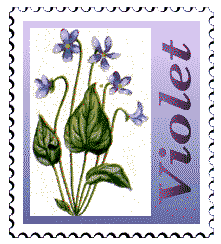
State Flower:
Violet
During early spring and summer, the delicate, fragile Violet appears in abundance throughout the state. Although a common flower that grows wild across the country, it's one of the most popular blossoms and a favorite for accent color in paintings, gardens and crafts.
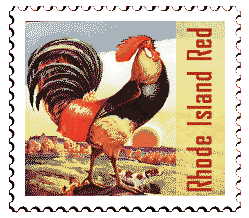
State Bird:
Rhode Island Red Rooster
This breed of hen was developed in 1850 on a small Rhode Island farm in Little Compton. Its introduction caused quite a cackle in chicken industry, for before the Rhode Island Red came on the scene, chickens were scrawny creatures and decidedly unflavorful. But Rhode Island Red changed all that and made poultry breeding a vital industry. The grateful town of Compton erected a monument to "Red," and it was official adopted as the State Bird in 1954.
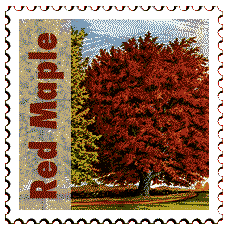
State Tree:
Red Maple
The Red Maple flourishes in springtime, projecting clusters of reddish orange flowers that drape from its branches. When the leaves open up they gradually grow large and green, making the Red Maple an excellent shade tree in the hot summer months.
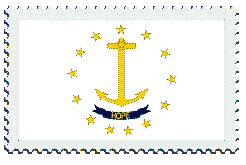
State Flag:
The thirteen stars represent the thirteen original colonies. The anchor is an maritime symbol of hope as are the colors white and blue, which ties into the state motto: "hope."
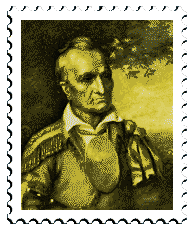
Famous Person:
Metacomet, also known as King Philip
Metacomet was the second son of Massasoit, the peaceful Wampanoag chief who maintained friendly relations with both Massachusetts and Rhode Island settlers for decades. When Metacomet became chief, however, it became increasingly difficult to keep peace due to the growing demand for more Indian land in exchange for blankets, guns and liquor. Known for his dignity, the final humiliation came when he was told to surrender all guns, leaving him just blankets and booze in place of all that land. Embittered, he launched a 13-year Indian uprising, called "King Philip's War." When defeat seemed imminent, he retreated to his ancestral home at Mount Hope, where he was betrayed by an informer, captured, beheaded, and quartered. His head was displayed on a pole at Plymouth for 25 years.